
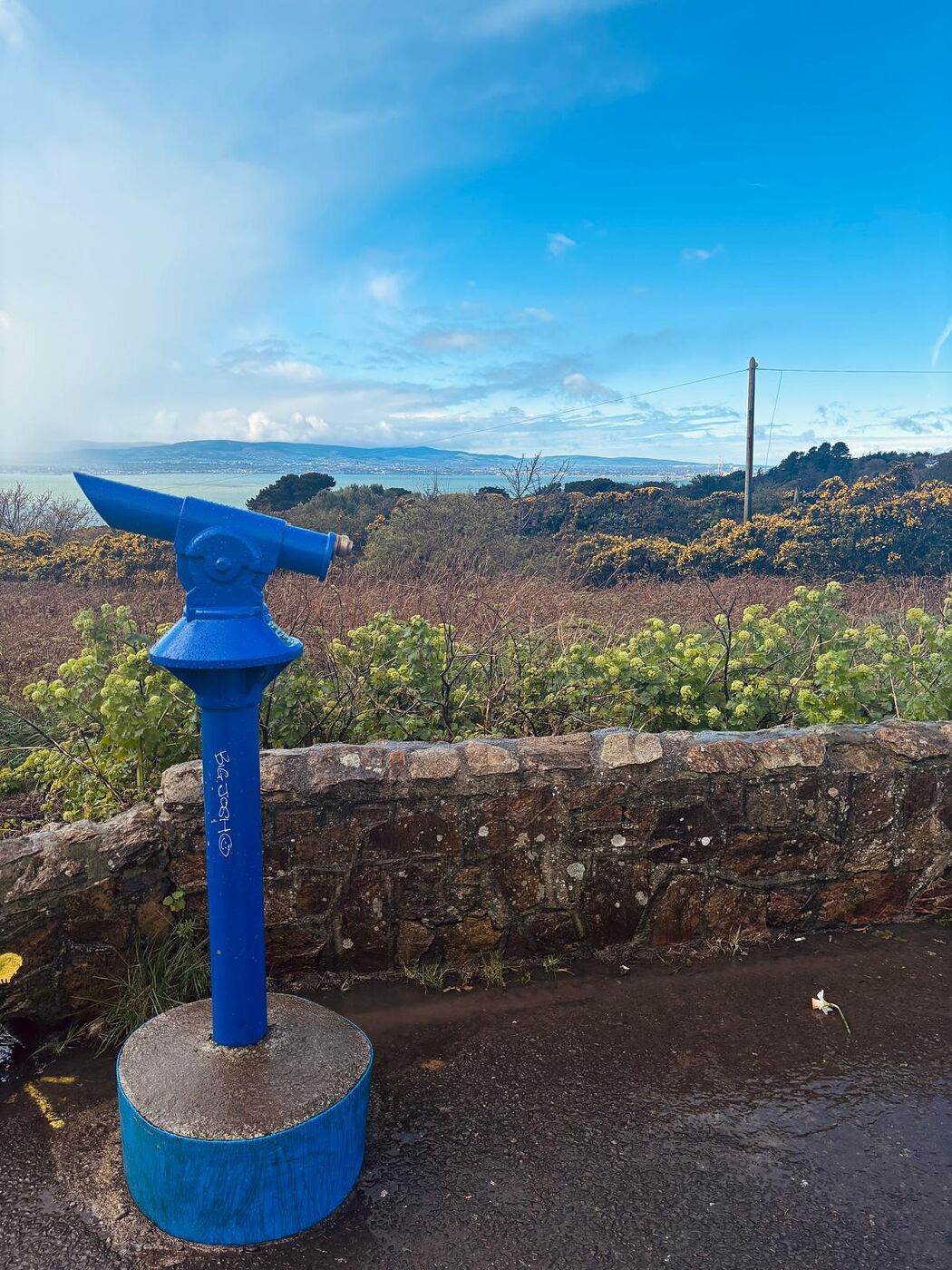
There's a blue coin-operated telescope planted on a corner in Howth, pointed at Dublin Bay. It's the kind of object that seems silly until you actually stop and look through it — because on the other side of the lens is an entire city, squeezed onto the horizon, looking small enough to fit on a coin. And it's exactly that distance — physical and mental — that changes everything about living and working in Ireland.
Because Dublin, up close, is chaos. Traffic, steep rents, streets full of people in suits walking far too fast. But Dublin seen from Howth — a fishing village tucked onto a peninsula, half an hour by train from the centre — is a completely different city.
The City Digital Nomads Haven't Properly Discovered Yet
While Lisbon and Barcelona are saturated with digital nomad content, Dublin carries a nickname few people outside tech know: Silicon Docks. That's where, in the city's regenerated docklands, Google, Meta, LinkedIn, Salesforce and Stripe keep their European headquarters — a concentration of tech that's rare anywhere in the world, English-speaking, inside the European Union.
That doesn't mean easy jobs or guaranteed fully remote roles — the reality in 2026 is that most of these companies work hybrid, two or three office days a week, with fully remote reserved for senior positions. But it means something subtler and more interesting for people who already work remotely for clients elsewhere: Dublin is one of the few places in Europe where the whole surrounding economy was designed with tech people in mind — coworking on every corner, an established international community, native English with no adjustment needed.
Outside the Centre, a Different Speed
The real turning point, though, isn't in the centre. It's on the coast. The electric train that runs along the sea — the DART — connects villages like Howth, Malahide, Dalkey and Killiney to the centre in twenty to forty minutes, gliding over the traffic that traps anyone relying on car or bus.
Howth, in particular, is the kind of place that seems geographically impossible so close to a European capital: cliffs, a working fishing harbour, a circular coastal trail around the whole peninsula, and a village rhythm that doesn't exist in any central Dublin neighbourhood. People who live there aren't escaping the city — they're choosing to live next to it without paying the price (literal and figurative) of being inside it.
What This Means for Remote Workers
The lesson Howth teaches is bigger than Ireland itself: the best move for a remote worker often isn't choosing between big city and quiet countryside — it's finding the exact spot where the two are half an hour apart by train. Dublin has the infrastructure, the international community and the tech density that support a serious remote career. The coast around it has what that same career needs so it doesn't become only work: sea air, silence, and the option to close the laptop and be on the trail in five minutes.
That balance — still rarely covered by people writing about digital nomad life — is why Ireland is now on the Sassonomad radar.
Join the community
New guides, stories and updates first, straight to your inbox. And soon, the Sasso Nomad community spaces.