

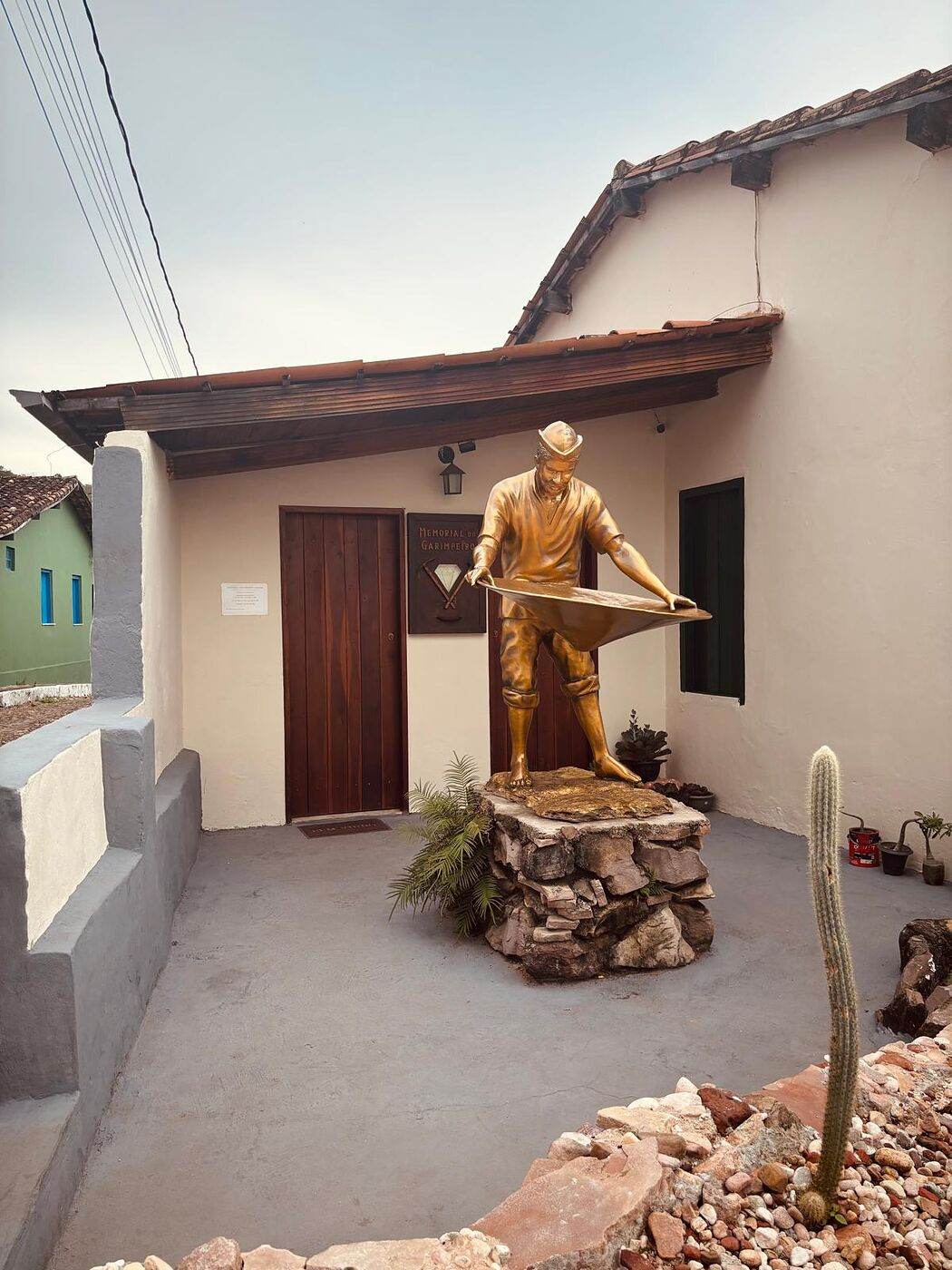
In Lençóis there's a golden statue of a diamond miner holding a bateia — the pan that, centuries ago, separated diamonds from ordinary stone in the region's rivers. He stands there, in front of the little house that became a memorial, looking at a trade that no longer exists. But the gesture — the patience to sift, slowly, until you find what matters — still describes exactly how this place should be visited.
Chapada Diamantina isn't a destination for ticking items off a list. It's a destination for people willing to take their time.
A Town Built on Hurry — That Learned to Have None Left
Lençóis was born from the kind of urgency only gold and precious stones create. Founded in 1844 on the banks of the Serrano River at the height of the diamond rush, the town grew too fast: pioneers, miners and enslaved workers formed camps that became streets, then colonial mansions, then the historic town that exists today. The name — “bed sheets” in Portuguese — comes from the miners' white tents spread across the valley: from a distance, they looked like sheets hung out to dry.
What few people know is what came out of those rivers: carbonado, an extremely rare black diamond, exported straight to Europe and used to make industrial drill bits at the peak of the Industrial Revolution. Lençóis lived decades of wealth built on brutal work. Then, with the abolition of slavery and the end of the diamond cycle, the town simply stopped — and, ironically, it's that century of stagnation that preserved the historic centre intact, now a National Heritage site protected by IPHAN.
A town that was born chasing stones and now lives off the opposite: people who travel far just to learn how to stop rushing.
The Rhythm Left Behind When the Rush Was Gone
What really stays with you after a few days in Lençóis isn't only the architecture — it's the rhythm. The town doesn't hurry. Shops open and close on their own schedule, the river runs through town in no rush at all, and life happens on verandas and in conversations on the square, not behind a tour-agency counter.
It's the perfect base for exploring the Chapada without submitting to the rigid schedule of three-day packages.
The Chapada That Only Exists for Those Who Stay
There's a river in Lençóis that isn't on any agency itinerary. Not because it's a closely guarded secret — it's because you only get there by invitation. Spend a week in town, go to the same bakery, greet the same faces on the square, and eventually you'll hear the question that changes everything: “have you been to the river up there yet?” Suddenly you're in a pool of dark, still water, that amber tone only the Chapada has, surrounded only by locals, kids jumping off one particular rock every resident knows, and not a tourist in sight.
That's not luck, it's a consequence. The Chapada has a strong community culture — the same one that carried it through decades of isolation after mining ended — and that culture doesn't open up to people spending a weekend photographing waterfalls. It opens up to those who stay long enough to stop being visitors and become familiar faces. It's the kind of belonging no tour van can sell, because it isn't for sale — it's earned.
Pools, Trails and the Time Things Take
The national park that gives the region its name is huge — and most of it never appears on the first pages of search results. The pools hidden among sandstone formations have a colour that surprises anyone expecting crystal-clear water: dark, almost like strong tea, stained by centuries of decomposing organic matter — and still clear enough to see your own feet on the bottom. Trails climbing rocky plateaus to fields of endemic flowers, waterfalls that only show their full force in the right season — none of it can be experienced in a hurry.
Taking a van between sights is quick, but it flattens the experience. Going slowly — combining shared transport with days spent at the same base, without switching guesthouses every night — is what turns a weekend visit into a real relationship with the place.
Stay With People Who Know the Ground
The difference between a postcard Chapada and a lived-in Chapada comes down, largely, to where you sleep — and the good news is that Lençóis doesn't push anyone into a single format. There are family homes renting a room and serving breakfast in their own kitchen, busy hostels full of people swapping trail tips on the veranda, boutique pousadas for those who want comfort without giving up the historic centre, and larger hotels for those who prefer more facilities. The kind of stay that suits you exists — the difference is that here, whichever you choose, you can be close to real people, not isolated in a walled resort.
Pousadas run by locals — many of them by families who have been there for generations — give you what no hotel chain can: the right tip on the trail of the day, the time without crowds, the restaurant only residents know exists.
That kind of knowledge is what separates people who passed through the Chapada from those who actually got to know it.
A Town That Never Looks the Same Twice
Lençóis fools anyone expecting a village frozen in time. It's actually surprisingly cosmopolitan: a floating population of travellers, volunteers, researchers and people passing through renews its face almost every day. The next table at the café might be an Argentinian couple today and a group of biologists studying cerrado wildlife tomorrow.
That constant mix also opens doors no trail opens on its own: there are places in and around town that take volunteers — from environmental projects to community initiatives — offering more than a way to fill your time: a direct way to connect with locals and other travellers, building a network instead of just collecting landscape photos.
What This Article Didn't Tell You
Which river only locals go to, and how long it really takes to earn that kind of invitation. Which family pousada gives you the itinerary no agency offers. Which alternative trail empties out exactly when the agency trails fill up. That kind of information doesn't come from blog research — it comes from someone who stayed long enough to find out.
The Living in Lençóis guide is that map: the names, hours and invitations this piece only hinted at.
See the Living in Lençóis guideJoin the community
New guides, stories and updates first, straight to your inbox. And soon, the Sasso Nomad community spaces.